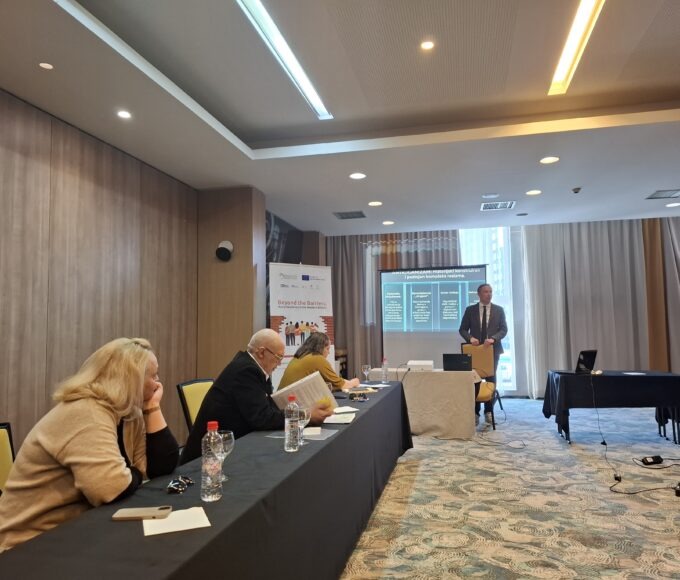





The “Beyond Barriers: Resilience of Roma in the Western Balkans” project is a regional initiative aimed at improving the economic status, social inclusion, and combating antigypsyism among Roma communities in five Western Balkans countries: North Macedonia, Bosnia and Herzegovina, Serbia, Albania, and Kosovo. The project is funded by the European Union and led by Romalitico – Institute for Research and Policy Analysis.
Working Group on Antigypsyism
The Working Group on Antigypsyism will address the widespread issue of antigypsyism through:
- Public policy advocacy
- Legislative reforms
- Fostering regional and national dialogues
The initiative aims to raise awareness of the harmful effects of antigypsyism on Roma communities while advocating for legal and policy changes to explicitly address the issue and protect Roma rights.
The project will create:
- Five country-specific working groups
- One regional working group
These groups will engage key stakeholders at national and regional levels to create effective and lasting solutions.
Working Group Structure
- Each group will have at least 10 members.
- Groups will lead advocacy efforts, produce policy recommendations, propose law reforms, and facilitate dialogue with relevant stakeholders.
Core Activities and Outputs
1. Recognition of Antigypsyism in Public Policy and Legislation:
- Conduct a comprehensive review of existing legislation.
- Formulate proposals to integrate antigypsyism references into national and regional laws.
- Organize training sessions for policymakers, legal experts, and government officials.
- Provide educational materials, case studies, and research findings.
2. Research and Reporting:
- Document the prevalence and impact of antigypsyism.
- Produce reports outlining manifestations, impacts, and policy recommendations.
- Develop at least 15 country-specific policy recommendations to prevent and address antigypsyism.
3. Stakeholder Engagement:
- Organize national and regional conferences (online and in-person).
- Create a collaborative platform to exchange insights, discuss challenges, and propose solutions.
Timeline and Expected Outcomes
- Establishment of Working Groups: March 2025
- Legislation Review and Research: April – June 2025
- Advocacy and Policy Proposals: 2025–2027
- Stakeholder Conferences and Collaboration: 2025–2027
Expected Outcomes:
- Increased recognition of antigypsyism in national and regional policies.
- Improved capacity of stakeholders, including policymakers and legal experts, to address antigypsyism.
- Actionable research findings and policy recommendations.
- Sustained collaboration and dialogue among stakeholders beyond the project duration.
Call for Experts
We are seeking qualified experts with experience in:
- Policy development
- Human rights and non-discrimination
- Roma advocacy
- Legal reform
- Commitment to combating antigypsyism
Requirements:
- Higher education degree
- Minimum 5 years of experience in Roma inclusion, human rights, or antigypsyism-related work
- Priority for candidates with research experience in these areas
How to Apply:
- Send your application, CV, and two references relevant to antigypsyism to: vladimir.kalisara.ric@gmail.com
- Deadline: Friday, 7 March 2025
- Include the call reference: BB_WG_0_2025
Selection Process:
- Selection will be carried out by a committee within Kali Sara – Roma Information Center.
- Equal treatment and non-discrimination principles will be respected.
- Only selected candidates will be notified.
Note:
Kali Sara – Roma Information Center reserves the right not to provide reasons for rejection.